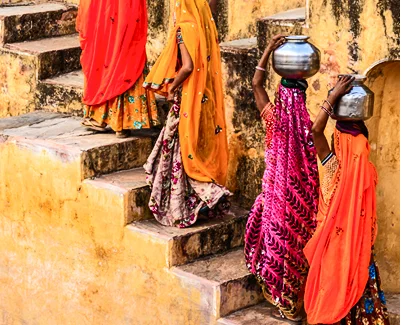
In villages where opportunities used to be few and remaining confined to household was normal, women have started finding their voices and it’s not loud, but steady. Self-help groups, or SHGs as they’re often called, have become the quiet revolution of rural India. These aren’t just financial collectives. They are safe spaces where women gather, save money together, lend small amounts to each other, and slowly start building a life that’s more in their control. Little by little, they shift from dependency to dignity.
Most of these women never handled money before, they never sat in a meeting or kept written records. Many were told they couldn’t. But SHGs change that. A woman who used to stay indoors now walks confidently into a bank. Another one who hesitated to speak in public runs a small grocery shop in her village. It’s incredible to see the transformation that begins with a few rupees and a lot of trust. They start with micro savings, lend within the group, and use the loans to start something tailoring, livestock, small food businesses, anything that fits their skills and surroundings.
Of course, it’s not always easy. They make mistakes. They lose money sometimes. Products don’t sell, markets aren’t always fair, and competition is tough. But even then, they keep going. That’s the beauty of it. It’s not just about profit. It’s about showing up, learning, and growing with each try. And they support each other when someone’s business fails, the others pull her back in. That solidarity, it matters more than any training. One woman’s success gives courage to the next.
Let’s take the example of Pushpa, a mother of three from a small village. She joined an SHG three years ago with no real idea of what it would mean. With a small group loan, she bought a sewing machine. At first, she stitched only for her neighbours. Word spread. Orders grew. Today, she trains two other girls and earns enough to send her youngest child to private school. "I never thought I would be the one providing," she says. Her eyes shine not with pride and purpose.
The benefits don’t end at income. When women start earning, the home environment changes. They’re no longer seen just as caretakers, but as contributors. There’s more respect, more conversation. Children look up to them. Some husbands even begin helping out. These shifts, though small, have deep roots. Empowerment at the financial level often leads to empowerment at emotional and social levels too.
Organizations like NGOs help these groups in many ways, from training and mentoring to linking them with banks and government schemes. Government programs such as the National Rural Livelihood Mission (NRLM) have played a big role in scaling SHGs across the country. But still, the real strength lies within the women themselves. They are not asking for charity they want a chance. A fair chance to earn, to learn, and to live with dignity. What started as a small village experiment is now a large network of empowered women changing their households and communities.
SHGs might be small in size, but their impact is huge. They are not just financial tools. They are proof that when women are trusted, when they are given space and support, they don’t just rise alone. They bring others with them. They bring collective change in family, society and eventually in nation building.